Denver Post Editorial Board endorsements for Amendment 79, Denver Public Schools’ bond issue and more.
Endorsements
Colorado isn’t ready for major changes to our election system, even if adopting an all-party primary and ranked-choice general election could mean more and perhaps better choices for voters in futur
Endorsements
If a crime or tragedy happens in Colorado, the second person a victim talks to after the police is often an advocate from one of the dozens of organizations primarily funded by a dwindling pot of fede
Endorsements
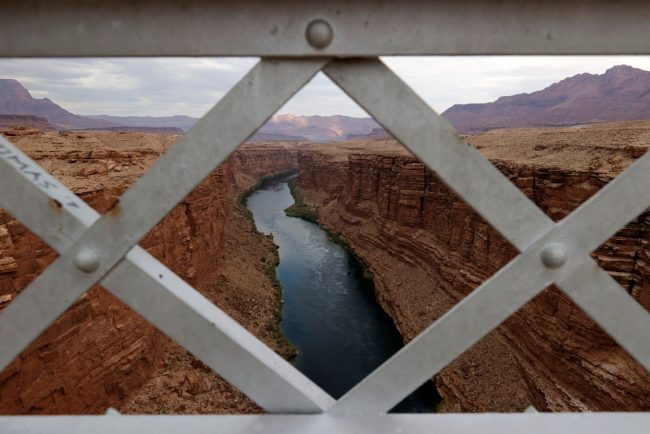
Woes of the Colorado River have justifiably commanded broad attention. The slipping water levels in Lake Powell and other reservoirs provide a compelling argument for changes. How close to the cliff’s edge are we? Very close, says a new report by the Center for Colorado […]
ColumnistsWoes of the Colorado River have justifiably commanded broad attention. The slipping water levels in Lake Powell and other reservoirs provide a compelling argument for changes. How close to the cliff’s edge are we? Very close, says a new report by the Center for Colorado River Studies.
But another cogent — and somewhat related — story lies underfoot in northeastern Colorado. That’s the story of groundwater depletion. There, groundwater in the Republican River Basin has been mined at a furious pace for the last 50 to 60 years.
Much of this water in the Ogallala aquifer that was deposited during several million years will be gone within several generations. In some places it already is. Farmers once supplied by water from underground must now rely upon what falls from the sky.
In the San Luis Valley, unlike the Republican River Basin, aquifers can be replenished somewhat by water that originates from mountain snow via canals from the Rio Grande. The river has been delivering less water, though. It has problems paralleling those of the Colorado River. Changes in the valley’s farming practices have been made, but more will be needed.
In a story commissioned by Headwaters magazine (and republished in serial form at BigPivots.com), I also probed mining of Denver Basin aquifers by Highlands Ranch, Parker, Castle Rock and other south-suburban communities.
Those Denver Basin aquifers, like the Ogallala, get little replenishment from mountain snows. Instead of growing corn or potatoes, the water goes to urban needs in one of America’s wealthier areas.
Parker and Castle Rock believe they can tap groundwater far into the future, but to diversify their sources, they have joined hands with farmers in the Sterling area with plans to pump water from the South Platte River before it flows into Nebraska. This pumping will require 2,000 feet of vertical lift across 125 miles, an extraordinary statement of need in its own way.
Like greenhouse gases accumulating in the atmosphere, these underground depletions occur out of sight. Gauges at wellheads tell the local stories, just like the carbon dioxide detector atop Hawaii’s Mauna Loa has told the global story since 1958.
Colorado’s declining groundwater can be seen within a global context. Researchers from institutions in Arizona, California, and elsewhere recently used data from satellites collected during the last two decades. The satellites track water held in glaciers, lakes, and aquifers across the globe. In their study published recently in Science Advances, they report that water originating from groundwater mining now causes more sea level rise than the melting of ice.
“In many places where groundwater is being depleted, it will not be replenished on human timescales,” they wrote. “It is an intergenerational resource that is being poorly managed, if managed at all, by recent generations, at tremendous and exceptionally undervalued cost to future generations. Protecting the world’s groundwater supply is paramount in a warming world and on continents that we now know are drying.”
This global perspective cited several areas of the United States, most prominently California’s Central Valley but also the Ogallala of the Great Plains.
In Colorado, the Ogallala underlies the state’s southeastern corner, but the main component lies in the Republican River Basin. The river was named by French fur trappers in the 1700s, long before the Republican Party was organized. The area within Colorado, if unknown to most of Colorado’s mountain-gawking residents, is only slightly smaller than New Jersey.
A 1943 compact with Nebraska and Kansas has driven Colorado’s recent efforts to slow groundwater mining. The aquifer feeds the Republican River and its tributaries. As such, the depletions reduce flows into down-river states.
Farmers are being paid to remove land from irrigation with a goal of 25,000 acres by 2030 to keep Colorado in compliance. So far, it’s all carrots, no sticks. Colorado is also deliberately mining water north of Wray to send to Nebraska during winter months. This helps keep Colorado in compact compliance. So far, these efforts have cost more than $100 million, some of the money coming from self-assessments and others from state and federal grants and programs.
In some recent years, more than 700,000 acre-feet of water have been drafted from the Ogallala in the Republican River Basin. To put that into perspective, Denver Water distributes an average annual 232,000 acre-feet to a population of 1.5 million.
Hard conversations are underway in the Republican River Basin and in the San Luis Valley, too. They will get harder yet. Sixteen percent of all of Colorado’s water comes from underground.
The Colorado River has big troubles. It’s not alone.
Allen Best chronicles water and energy changes in Colorado at BigPivots.com.
Sign up for Sound Off to get a weekly roundup of our columns, editorials and more.
To send a letter to the editor about this article, submit online or check out our guidelines for how to submit by email or mail.
Trump’s U.N. speech should be major cause of concern Re: “Trump criticizes countries at U.N.,” Sept. 24 news story Just over a year ago, we were bemoaning the fact that President Joe Biden’s advisors and the press had not called the question of his mental […]
LettersRe: “Trump criticizes countries at U.N.,” Sept. 24 news story
Just over a year ago, we were bemoaning the fact that President Joe Biden’s advisors and the press had not called the question of his mental acuity far sooner than they did. Following President Trump’s United Nations speech, described on the front page of The Denver Post this morning, it is time to raise the question about his mental acuity. His speech was unhinged, often not founded in fact, and rambled badly.
As I volunteer for several groups focused on climate issues, I pay close attention to what the president says and does in relation to that topic. Leaving aside what he has already done to destroy the ability of the U.S. to take a leadership role in the manufacture and adoption of clean energy, his speech called on the world to refer to coal as “clean, beautiful coal,” told world leaders that their countries would fail if they didn’t stop falling for “the green scam,” repeated false information about the cost of renewable energy, and talked about how renewable energy would require subsidies (avoiding the fact that global oil subsidies are far higher). And then there was the rambling, which, I’m sorry to say, we are getting used to and seemingly accepting. Watching the world leaders with their stunned faces reminded me that we can’t get used to what we are seeing; those who have the power to do so need to call this into question.
So who is going to raise the issue of the president’s mental acuity? Let’s start with an editorial from The Denver Post.
Lynn K. Rhodes Fritz, Lakewood
Re: “Flavored tobacco: Group pushing to repeal ban outraises supporters,” Sept. 24 news story
It amazes me that no matter what level of government there is, it attacks a problem from the wrong direction. Examples are: Denver wants to ban flavored tobacco because kids get it. But they don’t go after to the businesses that sell it to kids. It is the same for alcohol. Go after the businesses that sell alcohol to minors. The U.S. government is no different. They go after illegal immigrants who are working, but they don’t go after the businesses that hire them.
Leroy M. Martinez, Denver
Re: “Charlie Kirk memorial was celebration of grace; then Donald Trump spoke,” Sept. 24 commentary
David Mastio quotes Vice President Vance, asserting, “Grace is the enduring legacy of Charlie Kirk.”
A sampling of the “grace” Kirk spread:
• “Happening all the time in urban America, prowling Blacks go around for fun to go target white people, that’s a fact. It’s happening more and more.”
• “If I see a Black pilot, I’m gonna be like, ‘Boy, I hope he’s qualified.’”
• On the Black women Joy Reid, Michelle Obama, Sheila Jackson Lee and Ketanji Brown Jackson: “They’re coming out, and they’re saying, ‘I’m only here because of affirmative action.’ Yeah, we know. You do not have the brain processing power to otherwise be taken really seriously. You had to go steal a white person’s slot to go be taken somewhat seriously.”
• The Democrat[ic] Party “supports everything that God hates.”
• “I can’t stand the word empathy, actually. I think empathy is a made-up new age term that does a lot of damage.”
• “Reject feminism. Submit to your husband, Taylor [Swift]. You’re not in charge.”
• “… Leviticus 18 [says, if ] ‘thou shalt lay with another man shall be stoned to death.’ Just saying.”
• “[George Floyd] was a scumbag.”
• “I think it’s worth it to have a cost of, unfortunately, some gun deaths every single year so that we can have the Second Amendment to protect our other God-given rights.”
• “Jewish donors have been the No. 1 funding mechanism of radical, open-border, neoliberal, quasi-Marxist policies, cultural institutions and nonprofits.”
•“MLK was awful. He’s not a good person. He said one good thing he actually didn’t believe.”
It is unfathomable that Vance sees this as a legacy of grace.
Randy Livingston, Denver
Sign up for Sound Off to get a weekly roundup of our columns, editorials and more.
To send a letter to the editor about this article, submit online or check out our guidelines for how to submit by email or mail.

The Roadless Rule that the Trump administration wants to eliminate has not been controversial for 24 years because it is grounded in common sense. Stirring up needless fights over public lands is more about smoke and mirrors than wise management. The Forest Service manages about […]
ColumnistsThe Roadless Rule that the Trump administration wants to eliminate has not been controversial for 24 years because it is grounded in common sense. Stirring up needless fights over public lands is more about smoke and mirrors than wise management.
The Forest Service manages about 194 million acres. About 58 million acres of national forest are relatively undeveloped. These lands are remote, rocky and rugged, defined by what they don’t have — roads. They’re mostly accessed by trail, except in winter when they might be approached with snowmobiles.
Since the Clinton administration, these roadless lands have largely been left alone under the policy called the Roadless Rule. No one has complained, as there is plenty of work to do elsewhere. Leeway for management was written into the Roadless Rule, allowing the U.S. Forest Service to manage roadless areas where conditions merit. So why is the current administration so eager to rehash pointless battles?
I’m scratching my head. Perhaps this and other moves take our attention away from the current purges, budget and staff cuts that have left the agency in shambles. Perhaps the political appointees at the head of the Forest Service are themselves stuck in the past, trying to drive forward by looking in the rearview mirror. In any case, there is a wiser way forward.
That is: Stop creating controversy where none exists. This September, the public was given just 21 days to weigh in on repealing the rule. The response demonstrated that no one is asking for the changes the administration is pushing. Over 99% of the 183,000 comments submitted argued against removing the public land protection for roadless lands, according to the Center for Western Priorities, which evaluated the response.
The many conservationists who defend roadless areas tend to do so because these often-remote areas of our national forest are fine as they are and need to be left alone. They provide world-class wildlife habitat, havens for recreation and clean water.
During the Clinton Administration of the 1990s, the Forest Service created an administrative rule that basically said it would no longer build new roads into pristine forests, focusing instead on maintaining its existing backlog of 370,000 miles of roads. Any frequent visitor to our national forests will tell you that too many of these roads are fraught with ruts, deadfalls and washouts.
High elevation roadless areas never had roads built through them for the simple reason that it’s grossly impractical to build roads there. To do so would require massive government subsidies — first to build the roads and then to maintain them after floods, wildfire or freezing wipes them away.
The administration’s attempt to rescind the Roadless Rule of 2001 is basically a distraction. It takes us away from dealing with the long and time-sensitive “to do” list that hangs over the Forest Service–managing wildfires, clearing trails, fighting flammable weeds, fixing access roads.
Likewise, the extensive trail system of the Forest Service badly needs tender loving care, as do its campgrounds and other infrastructure. Foresters will tell you that many of our national forests have become overgrown because of generations of fire suppression. They need selective logging. But the practical place to begin addressing that expensive but crucial need is at the interface of wildlands and developed lands.
Idaho, a Republican state with more roadless lands than just about any other state, decided to do its own analysis of roadless lands during the 1990s. Idaho found it was fiscal folly to build roads on 99 percent of Idaho’s roadless lands. For context, the review revealed that Idaho roadless areas support some of the state’s best big game hunting, while also providing cold, clear water that native trout, salmon and steelhead need to spawn.
The roadless lands also tended to be poor at growing trees. Idaho’s review even called for stricter protections of some of its roadless lands than what was provided by the Clinton Administration.
Most Americans want our national forests to be well managed and open for people to enjoy. Roads are an important part of that. But pushing to build new roads in our most rugged areas is a fool’s errand. Let’s restore the national forests, trails and access roads that for too long we’ve allowed to deteriorate.
Ben Long is an outdoorsman, conservationist and longtime contributor to Writers on the Range, writersontherange.org, an independent nonprofit dedicated to spurring lively conversation about the West. He lives in Kalispell, Montana.
Sign up for Sound Off to get a weekly roundup of our columns, editorials and more.
To send a letter to the editor about this article, submit online or check out our guidelines for how to submit by email or mail.

Water solutions should be based on ‘facts and compromise’ Re “Colorado’s water war with Nebraska comes to a head,” Sept. 21 news story It is interesting that this article made no mention of the Ogallala aquifer, which helps to deliver irrigation water for crops in […]
LettersRe “Colorado’s water war with Nebraska comes to a head,” Sept. 21 news story
It is interesting that this article made no mention of the Ogallala aquifer, which helps to deliver irrigation water for crops in Nebraska.
Apparently, some parts of western Nebraska are experiencing significant depletion of the aquifer due to excessive pumping for agriculture. Climate change is also contributing to hotter weather, less rain and more drought in many western states.
As part of any future legislation for water sharing and agricultural irrigation, we must face the reality that water rights and water usage are going to be an increasingly pressing issue, and resolutions must be constructed based on facts and compromise, not threats and demands.
Stephanie Logan, Centennial
As we have a dispute between Colorado and Nebraska over water, and water districts impose water restrictions on homeowners, why are water districts and municipalities allowing developers to put more grass down along narrow strips next to roadways or by roads and sidewalks in communities that, over time, become weeds?
It may look nice, but as they water it daily and during a time when we receive rain, they still have their sprinklers going while homeowners have to conserve. Talk about wasting our valuable resource.
When are water districts and municipalities going to start facing reality, conserve our water and require developers to design something other than more grass, rather than placing burden on homeowners to conserve?
Dave Usechek, Parker
Re: “No school is safe from gun violence,” Sept. 21 editorial
The editorial board was absolutely correct to suggest that Jeffco school officials were complacent about security at Evergreen High School. Several excuses given for not having a resource officer present strained credulity. However, I was taken aback by the board’s assertion that assigning security and hardening our schools is “the only response” to prevent school violence.
The obvious solution, if we care about life, is to limit access to guns, especially the types that can be used to kill many people in a short time, and the kinds that can be concealed in a backpack.
As a former gun enthusiast, I hate that the misbehavior of other people has made me hate a sport that I used to love, and made me realize that my rights should be curtailed because other people can’t be responsible. But that is the point of laws — we have speed limits because some people speed, we have fraud laws because some people cheat.
The only logical solution is to recognize that we no longer live in 1776, that we no longer live in a rural society, and that guns are no longer a safe or necessary part of our culture. And so our laws need to change. And our Constitution needs to change. It is not a holy document. Today, the Second Amendment hurts us more than it helps us, and we need to get over ourselves and recognize that if our kids aren’t safe in their schools, we have all failed.
Dennis P. Laughren, Golden
The editorial states the obvious, but it fails to point out the real gun violence threat to children in the USA. It’s not schools. They just get all the media coverage. Just look at the facts, which are typically overlooked when emotions run high.
Sure, school shootings are beyond horrific. But a child is three times more likely to die in a mass shooting (or be injured – a category too often ignored) from a gun at home — more than half by a relative. Add in gun violence against children in the community, and schools end up being the safest place for kids to be. Add all the armed guards in schools you want, but most of the deaths and injuries in school shootings happen in the first 2 to 5 minutes of the shooting – far too quickly for armed personnel to respond.
If you’re a gun-lover, the best option would be to put armed guards in the homes of every child — and on the streets – because that’s where the vast majority of children are killed or maimed. Otherwise, it’s simply understanding that this is the only county on the planet with more guns than people. When we understand that, the solution is simple.
Joe McGloin, Sheridan
Re: “Don’t use Kirk’s death to silence speech, even gross speech,” Sept. 21 commentary
Elizabeth Spiers, the author of the article “Charlie Kirk’s Legacy Deserves No Mourning” that Emily Tracy posted to her Facebook page, claimed Kirk was a “racist, transphobe, homophobe, and misogynist.” Jasmin Murguia’s post characterized Kirk as “a white man who spews horrid [expletive] against every marginalized community.”
This is typical name-calling of conservatives by leftist progressives who mischaracterize their statements and are unable to offer effective counterarguments.
Others besides Krista Kafer are defending those who made hateful comments about Charlie Kirk after his assassination, arguing that it is against the First Amendment to suppress hateful speech. I agree, but those who issue hateful speech should not be surprised to receive criticism from others exercising their free speech. If they do so when they are in the government, teaching in schools, or working for corporations or non-profits, they must bear in mind that their comments — whether issued publicly through social media or in their official positions — may not align with the standards or policies of the organizations with which they are affiliated.
Organizations that discharge individuals who cheered Kirk’s death or made hateful comments often are within their rights to do so if they believe those actions sully the organization’s image or undermine the organization’s or that individual’s ability to interact with the public, clientele, or coworkers. The individuals are not silenced, as Charlie Kirk was permanently, but can continue their diatribe, just maybe not while with organizations that find their comments out of place.
Steve Lloyd, Cheyenne, Wyo
Re: “Because of Charlie Kirk: We must speak louder,” Sept. 21 commentary
Amy Stephens, in her guest commentary, points out that she and others must now articulate the values expressed by Charlie Kirk and many others. Yes, we must all encourage each other to articulate the values we find to be important, but most of us just continue, with growing peril, to “speak louder.”
Where are our best role models for good listening and for respectful discourse? Can we yet recover enough willingness to recognize that we ourselves just might gain new wisdom from people with whom we disagree?
Can we “listen better”?
Peter Hulac, Denver
In Amy Stephen’s guest commentary, she blames “progressive ideologue professors” for Charlie Kirk’s murder, claiming that such persons are “justifying violence when their ideas are challenged” and that now, instead of tantrums, they are throwing bullets. This is absolute rubbish, calculated to pour gasoline on the growing divide between conservatives and progressives.
The truth is that both conservatives and progressives are saddened by the senseless loss of this young father, regardless of any disagreement with his political and religious beliefs. Since Stephens is a Coloradan, she must be aware that on the day of Kirk’s murder, there was yet another school shooting in our state, perpetrated by a young man who was radicalized by an obsessive following of internet sites, which also inspired Charlie Kirk’s murderer.
Neither of these killers was urged to kill in a college classroom, as Stephens is well aware. Her vicious falsehoods are especially harmful now, at the moment when all Americans need to find common ground and affirm that political violence is never, ever acceptable.
Patricia Bedinger, Fort Collins
Re: “State to stay on sidelines in redistricting,” Sept. 21 news story
I appreciate the work of Jorge Rodriguez and his backers calling for the state of Colorado to fight back against states that are gerrymandering congressional district boundaries to benefit one political party. He’s right. It isn’t fair and something must be done. But I believe that something should be done regardless of whether other states are cheating.
While it may be true that Amendments Y and Z succeeded, to a certain extent, in taking politics out of the redistricting process, it did not take the next step: making congressional districts more competitive. Colorado’s congressional districts generally still favor candidates from one party over another. Just look at the data from the 2024 election.
While Gabe Evans, a Republican, won District 8 by just 2,449 votes and Jeff Hurd, also a Republican, won District 3 by just 19,804 votes, the rest of our districts clearly favored one party over another. Jeff Crank, a Republican, won District 5 by nearly 50,000 votes. Lauren Boebert, a Republican, won District 4 by almost 52,000 votes. Brittany Pettersen, a Democrat, won District 7 by over 60,000 votes. Jason Crow, a Democrat, won District 6 by more than 70,000 votes. Joe Neguse, a Democrat, won District 2 by over 164,000 votes. And the venerable Diana DeGette, a Democrat, won District 1 by 190,000-plus votes!
Based on the data, the State of Colorado cannot claim that it has done a good job of making our congressional elections competitive, as it has not. There is a lot more work to do.
Mike Dubrovich, Parker
Sign up for Sound Off to get a weekly roundup of our columns, editorials and more.
To send a letter to the editor about this article, submit online or check out our guidelines for how to submit by email or mail.

As an unapologetic Trump critic and so-called RINO (Republican in Name Only), my endorsement could cost a good Republican candidate votes, so I don’t endorse good candidates. Thus, I will not be endorsing the intelligent, hard-working State Sen. Barbara Kirkmeyer for Colorado governor. Sensible, principled, […]
ColumnistsAs an unapologetic Trump critic and so-called RINO (Republican in Name Only), my endorsement could cost a good Republican candidate votes, so I don’t endorse good candidates.
Thus, I will not be endorsing the intelligent, hard-working State Sen. Barbara Kirkmeyer for Colorado governor. Sensible, principled, and conservative but able to work across the aisle, Kirkmeyer is the best Republican candidate to run for governor in years.
Likewise, I will not be endorsing the smart, affable, and fabulously mustached former president of the State Senate and current Fremont County Commissioner Kevin Grantham for state treasurer. Both of these candidates have solid platforms and neither one raves hysterically on social media, so do not look for my name on their list of endorsements. They have a chance in 2026, albeit a slim one, so I won’t risk it. Although Colorado is solidly blue, weakened support for Democrats and a softening economy may give these two Republicans the chance they need to take a statewide office.
A recent Magellan Strategies poll finds that of those who voted for Kamala Harris last year, 47% now have an unfavorable view of the Democratic Party. The same poll shows 52% have an unfavorable opinion of Gov. Jared Polis’ job as governor. Forty-four percent disapprove of U.S. Sen. Michael Bennet and 49% U.S. Sen. John Hickenlooper. As a recent Denver Post editorial noted, “After years of enjoying popularity, Colorado’s top Democrats are now showing a remarkable drop in their approval ratings among voters.” Democrats cannot coast through the next election and a strong Republican may have a chance.
Given this possibility and the risks associated with a Kafer endorsement, I will not endorse the strongest candidates but the weakest for the position they are best suited.
I endorse State Rep. Scott Bottoms, who is also running for governor, to play the next Church Lady on Saturday Night Live. Of all his colleagues, he most frequently mentions Satan on the dais. Comfortable as he is with calling everything socialist and Marxist, he could also play Sen. Joe McCarthy in a dramatization for the History Channel, if he shaved his beard that is. Bottoms is an election conspiracy theorist who plans to release former County Clerk Tina Peters from prison if elected. With the Magellan Strategies poll showing 59% disapproval of Trump, choosing a full tilt MAGA candidate is the best strategy for keeping Colorado solidly in the Democratic column.
If that’s the goal, State Sen. Mark Baisley, another gubernatorial candidate, would also fit the bill. He once blamed Antifa for the Jan. 6 insurrection and once wrote that having hit their “socialist stride” the Democratic Party’s ultimate goal was “Sharia.” Keep Colorado blue, vote Baisley!
For embodying the axiom “if at first you don’t succeed, try, try again” I endorse former U.S. Rep. Greg Lopez who has run for governor twice and lost twice in the primary. Go for three! Tied with Lopez for the “try, try again” distinction is former State Rep. Janak Joshi who plans to run against Sen. John Hickenlooper who never loses and could probably run from the grave and win. Unfortunately, a solid non-endorsable Republican candidate has not thrown a hat into this race.
Finally, I could endorse Teller County Sheriff Jason Mikesell for governor, but I’ll need to Google his name and figure out where Teller County is.
All joking aside, it would be better for the party to run great candidates like Kirkmeyer and Grantham who can win not just Republican votes but bring along unaffiliated and even moderate Democrats. As elections in other blue states like Massachusetts and Maryland show, the right Republican candidate can win on occasion. To boost their chances, the candidates I have endorsed should drop out and direct their supporters and funders to a candidate who has a chance.
Krista Kafer is a Sunday Denver Post columnist.
Sign up for Sound Off to get a weekly roundup of our columns, editorials and more.
To send a letter to the editor about this article, submit online or check out our guidelines for how to submit by email or mail.
Denverites should keep one thing in mind at the ballot box this November – Denver Public Schools has some of the very best schools in the state and also some of the very worst schools in the state. Testing data released this month highlighted many […]
OpinionDenverites should keep one thing in mind at the ballot box this November – Denver Public Schools has some of the very best schools in the state and also some of the very worst schools in the state.
Testing data released this month highlighted many bright schools in the district, and Superintendent Alex Marrero should be very proud that the district’s students are catching up to their pre-pandemic peers.
However, the data also made something else starkly clear: School choice has never been more important for our children’s educational opportunities. Two schools only miles apart can have dramatically different outcomes for students who enter a classroom at the same level. Because school districts have started measuring and emphasizing growth, we now know where student growth in math and reading excels and where it is stagnant.
There are some candidates running for the Denver Board of Education who would rather see the district’s world-class lottery system go away. Or even if they want to keep the lottery, they want to keep the best schools in Denver a secret by making student growth data difficult to find and even harder to analyze.
We must protect and expand Denver’s universal lottery system for school enrollment. The lottery is not perfect but it is far better than the alternative – students locked out of attending top-performing schools by difficult-to-navigate enrollment procedures that vary school to school.
This November voters will have a critical choice to make – do they support Denver’s lottery system, where any student can attend any school they want with one easy form, or do they want a student’s academic quality to be determined by their home address?
We’re afraid the two dark-money groups attempting to buy this election aren’t asking that question. Instead, they are focused on whether candidates support charter schools or district-run schools, and whether or not the candidate is supportive of the Denver Classroom Teachers Association — a union — or not.
The problem is that the ideal candidate will be independent enough to buck the union when it is wrong, and strong enough to stand up to failing charter schools and demand accountability. In short, the endorsement of either group – the Denver Classroom Teacher Association’s Action and the Denver Families Action – is a dark mark on a candidate’s résumé.
We need candidates who will demand that the district present every school’s student growth data on their website – regardless of whether it’s a charter school or a district-run school.
We need candidates who will support and expand the school choice lottery so that it is more equitable.
We need candidates who will wrap neighborhood schools in services and funding to ensure that students who don’t have access to transportation to exercise choice get the very best education possible, even if their school is not seeing the same student-growth results as peer schools.
We need candidates who will find ways to provide transportation to students using school choice.
We need candidates who will not squabble with the district’s excellent charter schools but will partner with them to expand their success.
We need candidates who will return autonomy to innovation schools and find other creative ways to break the mold of underperformance.
And finally, we need candidates who will end the cycle of embarrassment where personal grievances, unprofessional behavior, and mistreatment of district staff only distract from the important work.
Let’s reframe this election and make it about things that matter this school year to every single student. School choice enrollment begins and ends early this year on Dec. 2 and Jan. 20, 2026. With the election leading up to the lottery, every candidate must tell voters where they stand on the issue.
Sign up for Sound Off to get a weekly roundup of our columns, editorials and more.
To send a letter to the editor about this article, submit online or check out our guidelines for how to submit by email or mail.
Bag fee is a hidden tax on Coloradans Founding Father John Dickinson, a Pennsylvanian who participated in writing the Declaration of Independence, joined his colleagues in condemning England’s Stamp Act. He termed it “… an authority expressly claimed and exerted to impose duties on these […]
LettersFounding Father John Dickinson, a Pennsylvanian who participated in writing the Declaration of Independence, joined his colleagues in condemning England’s Stamp Act. He termed it “… an authority expressly claimed and exerted to impose duties on these colonies — a dangerous innovation.”
Gov. Jared Polis’s signature on the legislation that outlawed plastic grocery bags, allegedly to save the environment, rings with similarity. California, Washington and Oregon have similarly banned plastic soda straws (Really? Soda straws?), considered a major step in the greening of the West Coast.
The main accomplishment in Colorado has been to burden citizens with significant inconvenience and a new tax (bypassing input by voters) that enriches Colorado cities and counties by millions annually. The tax provides no new constituent services, and the only greening I have seen is in the county and municipal coffers. Meanwhile, plastic packaging in all forms dominates supermarkets and every other marketplace. Banning plastic bags compares to a spit in the ocean..
Colorado’s bag-taxing efforts will have a negligible effect on the environment. It’s all about the money.
Alan E. Deegan, Highlands Ranch
Re: “Trump promotes unproven claims about Tylenol and autism,” Sept. 23 news story
I have little doubt that the rise of autism in our modern world is a result of chemical disturbances to physical and neurological processes. But instead of attacking vaccines, Robert F. Kennedy, Jr., and his anti-autism cohort should widen their view a bit. In medicine, devices and medications are extensively tested and studied, and their approval is based on benefit with reduced risk of harm.
In agriculture and industry, the opposite is true: chemical compounds are developed to perform certain tasks, with far less attention to interactions with other chemicals or unintended consequences. A pesticide is designed to kill “pests” – it’s only through realization of “off-label” harms that its use is challenged. While pollinators die in large numbers due to exposure to neonicotinoids, those trying to save bees are forced to prove the harmfulness of the substances used in pesticides, while industry pushes back.
Instead of attacking one of the few tested and studied types of compounds, I suggest Kennedy and his cohort turn their attention to the lightly-regulated toxic chemical stew in which we breathe, drink, and live. I’d be amazed if they weren’t able to uncover some autism triggers.
Nancy B. Weil, Denver
Re: “Disney made its move with pressure on multiple fronts,” Sept. 21 news story
Ah, it’s becoming clearer now that we-who-haven’t-been-paying-attention learn that the FCC Chairman Brendan Carr helped write Project 2025, the Heritage Foundation’s conservative policy handbook. Carr has encouraged local TV stations to push back against national networks that he believes create left-leaning programming.
Recently, The Denver Post informed us that the FCC caps national broadcast ownership at 39% of households, and yet the Nexstar-Tegna merger would more than double that, reaching over 80% of American households. This conglomerate will consist of 265 TV stations in 44 states, and the merger will require Carr’s approval, which it is sure to get by being the first media company to pull the Jimmy Kimmel show.
Nexstar will own four Denver stations when the merger is approved, adding 9News and KTVD. The writers of Project 2025 certainly had a plan for what we should be allowed to watch on TV.
Carol Kalmes, Wheat Ridge
Sign up for Sound Off to get a weekly roundup of our columns, editorials and more.
To send a letter to the editor about this article, submit online or check out our guidelines for how to submit by email or mail.
This week in New York City, I moderated a panel at Climate Week, a global gathering of leaders from government, business, finance, and civil society. Entitled “When the Mississippi River Runs Low – Why Climate Connects Us All” the discussion centered on the undeniable reality […]
ColumnistsThis week in New York City, I moderated a panel at Climate Week, a global gathering of leaders from government, business, finance, and civil society.
Entitled “When the Mississippi River Runs Low – Why Climate Connects Us All” the discussion centered on the undeniable reality that climate change is shaping our lives every day. We see it whether it’s rivers that run low, forests that burn hotter and faster, or cities where children can’t safely play outside because the playground equipment has become dangerously hot.
This same week, across town at the United Nations, the president of the United States used his address to once again declare climate change “a hoax,” and the “greatest con job ever perpetrated on the world.” He railed against reality and renewable energy, dismissed science, and painted global cooperation as a conspiracy against America.
Just because the president calls climate change a hoax, doesn’t make it so. Repeating words like “con” and “scam” does not change the facts. It doesn’t change the extreme heat gripping our cities, the catastrophic floods washing away neighborhoods, or the wildfires scarring our mountains. It doesn’t change the lives lost, the billions in damages, or the instability cascading across our economy. And it certainly doesn’t change the reality the American people are living in.
In New York, I saw and heard from leaders from around the world, taking this challenge seriously. Sitting side-by-side were U.S. Senators and governors, utility CEOs and investment bankers, community banks and farmers, mayors and environmental justice leaders, global corporations and local NGOs – all participating because they recognize two fundamental truths.
First, climate change is an undeniable reality that we can see, measure and feel. Work must be done to mitigate it. It is not a partisan talking point. The mayor of Phoenix told us her son’s school canceled recess because the playground slide was too hot for children to play safely. That’s just one story in a sea of evidence — rising tides, stronger hurricanes, devastating floods and relentless wildfires.
Second, inside of this crisis lies an economic opportunity. The clean energy transition is not just a moral imperative, it is a business case. Economies can be built around clean energy, and communities can thrive. Renewable energy, energy efficiency, electric vehicles, and sustainable infrastructure are already driving job creation and investment across the globe. Countries like China and India understand this, and they are racing ahead. If America chooses denial over action, we cede those opportunities — and the jobs, industries, and influence that come with them — to others.
This is where Colorado matters.
Colorado has long been a leader in renewable energy and climate innovation. A recent analysis by a Colorado media outlet ranked our state among the top in the nation for clean energy development, thanks to policies that prioritize wind, solar, and efficiency. Our universities are pioneering research on battery storage and grid integration. Our utilities are cutting emissions while keeping rates affordable. And across our rural communities, farmers and ranchers are adopting practices that conserve water, reduce carbon, and strengthen local economies.
These successes didn’t happen because Washington handed them to us. They happened because Coloradans–like so many other Americans—saw the risks of climate change and the promise of clean energy, and we acted. Our businesses, nonprofits, local governments, and citizens led the way. We refused to wait for permission.
And that’s the lesson for today.
If the federal government won’t take climate change seriously, we must–and we will. States can continue passing bold policies. Cities can keep innovating. Businesses can invest in renewables and efficiency because it’s good for their bottom line. Individuals can support clean energy and vote for leaders who understand the stakes. Together, we can build momentum from the ground up, no matter who occupies the Oval Office.
Make no mistake: it would be best to haveCongress and the White House invest in infrastructure, set ambitious targets, and lead in global climate negotiations. But the absence of leadership in Washington cannot become an excuse for paralysis. It must become a rallying cry for all of us to step up.
The president may be unwilling to step up, but in Colorado–and in communities across the country—we call it reality. And we call the clean energy transition what it truly is: the greatest economic and moral opportunity of our time.
They say that the Roman Emperor Nero fiddled while Rome burned. But we will not let that happen. Americans are rolling up their sleeves! We are proving that climate action is not just possible–it’s profitable, practical, and profoundly necessary. And if Washington won’t lead, we will lead, in states, counties, cities and towns alike.
Because the stakes are too high. The evidence is too clear.
Bill Ritter is the 41st Governor of Colorado, Chairman of the Board for the Climate Group/North America and a Principal at Freestone Strategies.
Sign up for Sound Off to get a weekly roundup of our columns, editorials and more.
To send a letter to the editor about this article, submit online or check out our guidelines for how to submit by email or mail.
We all come from different political perspectives, but what unites us is the unwavering belief that first and foremost, we are Americans, and we live in the best country in the world. At least that used to be the case. Recent events of political violence […]
ColumnistsWe all come from different political perspectives, but what unites us is the unwavering belief that first and foremost, we are Americans, and we live in the best country in the world.
At least that used to be the case. Recent events of political violence have challenged that belief and further eroded our philosophies of finding common ground and coming together during times of crisis. The only way to stop this erosion is to remember what unites us, while seeking common ground, without vilifying the other side.
That is exactly what we strive to do every day, even though we have incredibly diverse perspectives, experiences, and ideas on how to move our country forward. One of us is a Republican and the other is a Democrat. Our differences run deeper. One served as a U.S. Air Force JAG in Iraq working in support of Operation Iraqi Freedom, and the other has traveled the world equipping hospitals in low-income countries with medical supplies and teaching farmers modern agriculture practices.
While those experiences and associated goals seem worlds apart, they do stem from a common interest – wanting to make people’s lives better. Both of us served in the Colorado State House of Representatives. That’s where our friendship started. It’s also where we learned life-long lessons about compromise, patience, and actively listening to the concerns and ideas coming from the other side.
Ultimately, our experiences and understanding of the political environment brought us together with the shared goal of bringing bipartisan focus to the public policy making process in both Denver and Washington D.C. In our four years of working together, we have learned that finding common ground is difficult, messy, and humbling, but attainable when we check our preconceived notions at the door. We have also learned that finding common ground is something to celebrate when it happens. Finally, we have learned it can be devastatingly harmful when we refuse to put our differences aside.
Bipartisan connection is a must, though, if we want to move our nation forward. That connection starts with denouncing all forms of political violence, regardless of the source. Robert Kennedy’s 1968 impromptu speech atop a car rooftop in Cincinnati captures the essence of what it means to acknowledge deep hurt and pain but to refrain from retaliation. Cincinnati remained calm while Detroit and DC burned portions of their cities to the ground after the tragic assassination of Dr. Martin Luther King, Jr.
Years ago, on a trip to Rwanda there was a discussion with a bishop who had his entire family slaughtered in one of the most horrific acts of genocide in modern history. We still talk about him today. It would have been so easy to retaliate. Instead, he helped form a Truth and Reconciliation commission that focused on accountability, understanding, and forgiveness. Without it, his country would have continued spiraling into a deep pattern of revenge.
Our country is experiencing deep pain and anger from political violence that has targeted governors, speakers of the House, well-known activists, and so many others. We can learn a lot from the bishop in Rwanda by holding those accountable who use hate to perpetuate political violence. We must also be willing to forgive and strive for greater understanding of the issues that divide us. Spiraling into hate only wastes energy, furthers the divide, and produces greater suffering. It never produces a positive result.
We are all accountable to stem the tide of political violence and extremism our nation is experiencing today. It is incumbent upon each of us to individually reach out to others with different political ideas and simply listen to their point of view. Disagreement is ok, if it doesn’t lead to hate. And who knows, there might also be some common ground to discover.
We will always have political differences and that’s a healthy dynamic element necessary to move our relationships and democracy forward. Just look at the unlikely friendship involving two deceased U.S. Senators – Republican Orrin Hatch of Utah and Democratic Ted Kennedy of Massachusetts.
Senator Hatch once remarked that he ran for the United States Senate in the 1970’s to stop Senator Kennedy’s liberal agenda, but during the next 40 years, both Senators forged a bond of friendship and professionalism that enabled them to enact landmark legislation in childcare, nanotechnology, and multiple other achievements.
Anything is possible, but we need to have trust in those who see the world differently. Different perspectives have the power to fuel critical thinking which leads to better solutions for our nation. That’s the way the founding fathers intended it. Reach out to someone and share this perspective.
Mark Waller and Joe Miklosi both served in the Colorado State House of Representatives. They own a government relations firm that focuses on bipartisan solutions.
Sign up for Sound Off to get a weekly roundup of our columns, editorials and more.
To send a letter to the editor about this article, submit online or check out our guidelines for how to submit by email or mail.

‘In support of Democratic leaders’ Re: “Colo. voters are dissatisfied with Democrats. Polis, Hickenlooper and Bennet can’t hide,” Sept. 14 editorial I disagree with your editorial. Democrats are not upset with Democratic leaders. If you only pay attention to Fox News, then yes, you would […]
LettersRe: “Colo. voters are dissatisfied with Democrats. Polis, Hickenlooper and Bennet can’t hide,” Sept. 14 editorial
I disagree with your editorial. Democrats are not upset with Democratic leaders. If you only pay attention to Fox News, then yes, you would think this. No one in my circle is upset with them, because they understand that Republicans have the power right now, which is making it difficult to fight back.
When I look beyond my circle at all of the protestors marching around the country, I see millions of us fighting back with signs, voices, and our feet. I don’t see anyone upset with Democrats to the level your editorial would suggest. Instead, I see people who want to help our Democratic leaders as they face impossible odds.
I am a proud Democrat in support of Democratic leaders.
Monta Lee, Littleton
In today’s political climate, extremists are on both sides of the political spectrum. What is the common trait they share? They lack the willingness to compromise. They refuse to compromise the sanctity of their principles and values for the sake of working together to solve a festering problem.
Here’s a test:
• Are you willing to compromise your position on immigration?
• Are you willing to compromise your position on DEI?
• Are you willing to compromise your position on gun control?
• Are you willing to compromise your position on support for Israel and Ukraine?
• Are you willing to compromise your position on climate change?
If you answered “no” to any of these questions, you are part of the problem.
America was built on compromise. For over 200 years, Congress has solved problems to move forward. What happened to us?
Curt Anderson, Broomfield
The principle of humility underlies the constitutional guarantees of free speech and freedom of the press. Anybody, whether on the left or the right, who is unwilling to accept the possibility that their own views may be wrong, has no more than a shallow commitment to freedom of opinion and expression.
The founders of our country understood the danger of arrogant overconfidence. We can only hope that voters and those we elect will soon recognize that danger and the danger of diminishing our freedoms.
Paul Lingenfelter, Denver
I am opposed to opening roadless areas to logging or other development, as they are of our last remaining untouched woodlands and wild areas. These should be saved for our grandchildren.
Some want to sell off public lands that belong to all American citizens. Perhaps they want to profit from the sale of lands that are not exclusively theirs. How can that be fair to the rest of us?
We already have visitor stress in some of our parks simply due to recreation demand. Look at Arches National Park in Utah and Rocky Mountain National Park in Colorado. As our population grows, there will be more demand for these rare and unique ecosystems. And that is why future generations will thank us for keeping them.
Wildlands are fleeting; we must preserve them.
Thanks for listening and supporting land conservation.
Joe Mollica, Glenwood Springs